

How to Run Tenant Background Checks in Gainesville

Most property owners in Florida want to screen their tenants, and the state has some laws around consent and fair housing that you'll have to follow. One of the biggest challenges is making sure that you apply those same standards to all the applicants. Income verification can get a bit tough when you're working with gig economy workers or with international students who don't have traditional pay stubs.
Screening everyone with the exact same process (credit checks, criminal history, eviction records, income records and references) can create a paper trail that backs up your decisions if they are ever questioned.
Let's talk about the main steps to screen your tenants well in Gainesville!
The Florida Rules for Tenant Screening
Background and credit checks are great screening tools when you look at rental applicants in Florida. But you'll have to follow a legal obligation first. You have to get written permission from the applicant before you pull any of their personal information - this means background checks and credit reports. Verbal consent won't work here - Florida law specifically needs it to be in writing. It's a simple step. But it's mandatory.
Federal Fair Housing laws apply to every state in the country, so Florida tenants already have a baseline of protection just like everyone else. Florida also has its own Fair Housing Act on the books, and it gives a few extra layers of protection on top of what the federal laws call for. These two sets of laws are designed to protect renters from discrimination based on race, color, religion, sex, national origin, familial status and disability.

The biggest mistake that landlords make with tenant screening is that they don't treat everyone the same. Your screening criteria have to be applied in the exact same way to every person who applies - and I mean every one. Pull a credit report for one applicant, and you'll have to pull it for all of them. It's the same with criminal background checks - you can't run them for some applicants and then conveniently skip others. Picking and choosing who gets screened and how creates a liability issue that can turn into some serious legal problems. A Tampa landlord got hit with a discrimination lawsuit after he used different income standards for different applicants. Even though he probably didn't mean to discriminate, it looked bad enough in court that it became a problem. Another property manager in Florida only ran eviction checks on some of the applicants, and she had to pay a large settlement to make the whole situation go away.
The Three Reports for Landlords
After you have consent and you've confirmed everything is in line with fair housing laws, you should run the three main reports that Gainesville landlords use most. We're talking about credit reports, criminal background checks and eviction history. All three of them tell you different details about who this person is as a possible tenant.
Credit reports give you a close look at how a possible tenant deals with their money month to month. You'll see their full payment history, what they currently owe and if they actually pay their bills on time. All this information helps you see if they can afford the rent each month and if they're responsible with their financial obligations.
Criminal background checks pull from county and state databases, and they'll show if your applicant has any prior convictions that could have been a safety concern for your property or for the tenants who already live there. Fair housing laws mean that landlords need to review criminal records on a case-by-case basis instead of making blanket rejections, so you should review each one closely based on what you actually find.
An eviction history report pulls up court records to show you if a tenant has ever been filed against for eviction. A case could have been thrown out or dropped. But the fact that a previous landlord actually took the tenant to court can tell you a whole lot about what happened during that tenancy.
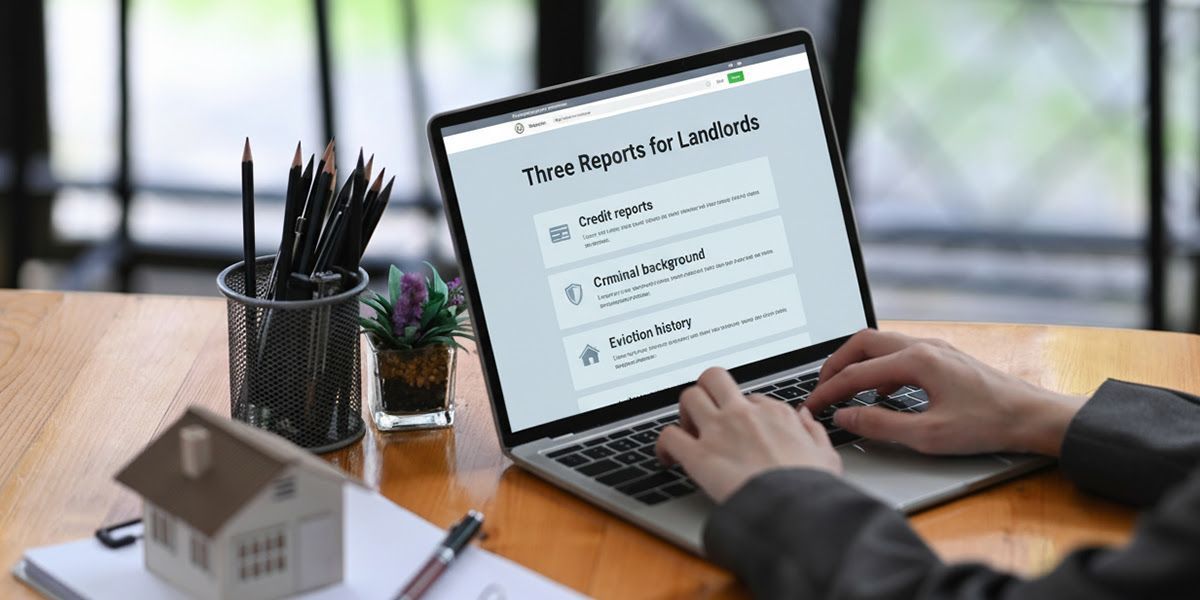
All three reports together are going to give you a much fuller picture than just one or two of them would. An applicant could have perfect credit scores, but then you pull their eviction history and find that they got kicked out 6 months ago. Another person could have zero evictions on file, but their credit shows late payments month after month. Each report tells you something different about the person, and you really need all three to make the right call about who gets the keys.
Outdated or incomplete information is one issue you'll have to watch for when you go through these reports. Records usually lag behind by a few months in many cases, and databases don't always sync up the way they should between different systems. Name mismatches are another common issue if an applicant has gone by different names over the years or has had their name changed legally at some point. If something doesn't quite add up when you look at the paperwork, it's worth going back to your applicant directly to verify the specifics and sort out any uncertainty.
Verify Your Tenant's Financial and Rental History
A credit report will give you plenty of useful information about your applicant, and it's a big part of the screening process. The report won't tell you if they can afford to pay the rent each month, though. Most landlords around Gainesville follow a pretty standard income guideline - they want to see that the tenant makes about 2.5 to 3 times the monthly rent.
Pay stubs and tax returns work great as proof of income if you have tenants who have standard W-2 jobs. Lots of renters are making their living through freelance work or gig economy apps like Uber and DoorDash. It gets a bit harder to verify income here because they don't get the same predictable paycheck every 2 weeks like a traditional employee would. Bank statements are probably your best bet for these applicants - just ask for 3 to 6 months of the statements so you can review their deposit history. A few months of transaction records will give you a much better sense of what they're earning regularly.

Previous landlord references matter just as much as the financial documents you've been collecting. Try to reach out and talk to landlords from at least 2 or 3 years back if you can manage it. Their most recent landlord might paint an overly rosy picture, and this happens quite a bit when they're looking for a way to get rid of a problem tenant. The landlord right before the most recent one is usually going to give you a much more honest assessment of what type of renter this person is.
Payment history is usually the biggest factor to cover when you're calling up a previous landlord. You want to know if the rent payments came in on time every month or if this person was always running late with their checks. It's also worth finding out if they gave enough warning before they moved out of the unit. Another big area to cover is any complaints from the neighbors or damage to the property that goes well past the usual scuffs and marks from regular wear and tear.
A long pause before they answer could mean that they're choosing their words carefully. The small cues in how they respond are usually going to tell you a lot more than the words that come out of their mouth.
Quite a few landlords skip these calls because they feel awkward or feel they just eat up too much time. It's worth the effort, though, to verify income and rental history and make sure to get it done before signing that lease and handing the keys over.
Student Renters and the Co-Signer Option
College students and first-time renters are in a tough situation with their credit history - they just haven't had enough time to build one yet. And odds are, they won't have a previous landlord you can call up for a reference either. If you don't have access to that information, it's pretty hard to tell if rent payments are going to show up on time each month. A co-signer or guarantor can step in to solve that problem and give you the reassurance that you'll need to move forward with the lease.
A co-signer is a person who agrees to step in and pay the rent if your tenant can't cover it themselves. Make sure to screen the co-signer with just as much detail as you'd screen the tenant - run the same background check, pull the same credit report and all of it. The co-signer needs to have enough income to cover the rent for your property and whatever other bills they're already paying each month. Most landlords like to see a co-signer who brings home at least 3 times the monthly rent amount.

Group leases work a bit differently and need a bit of extra thought on your part. With multiple students who want to rent a unit together, one of the first decisions you'll need to make is whether to screen everyone or just pick one person to vet. Run a background check on each adult who plans to live in that unit.
Some landlords will only screen the person who signs the lease and skip any background checks on the roommates. This can save time during the application process. The downside is that you're not going to have any information about the other tenants who are actually living in your property day-to-day. You'll have a much harder time holding everyone accountable when only one person is officially listed on the lease agreement.
First-time renters usually get nervous about the whole screening process. Most of them worry that having no rental history will kill their odds before anyone even looks at the rest of their application. The best way to calm those concerns is to walk them through what you're looking for and why each part matters. Everyone has to start somewhere. Acknowledging that reality up front can go a long way toward making them feel more comfortable with the process. When their application could use a little extra support to meet what you're looking for, a co-signer could be worth bringing up as an option.
The best way to handle this is to apply the same screening standards to every applicant who walks through the door. Every person needs to go through the same exact process, whatever their background or situation is. This gives you two big advantages. It puts you on safe ground with fair housing laws (those don't leave much room for error) and helps you make better, more even-handed decisions about which tenants are going to be the best fit for your property.
What Should You Do After a Denial
Rejection happens - sometimes you'll have to turn down a rental applicant because something came up on their background check or credit report. When this happens, you'll need to send them what's called an adverse action letter. The Fair Credit Reporting Act makes this a required part of the process, and there's no way around it.
The letter needs to spell out the exact reason you denied their application and give them a chance to dispute any information in their report that they believe is incorrect. Include the name and contact information for the screening company that provided the report and explain that the applicant can request a free copy and has the right to challenge any inaccurate information directly with the reporting agency.
Skip this letter, and you could be looking at some big legal problems as a landlord. Financial penalties add up fast once an applicant you turned down decides to file a complaint about it. Valid reasons for the denial won't matter - you can still face legal issues just for not sending out that letter.

Most tenant screening services have templates for adverse action notices that you can usually find online without too much effort, and some newer systems will even handle this step automatically, which is convenient. Your best bet is to send the letter out quickly once you've made your final tenant choice - most landlords and property managers send it within 3 to 5 business days after they decide.
The letter protects you just as much as it protects the person who applied. It makes the whole process transparent and on the record, and also gives the candidates a fair shot at disputing any errors or inaccuracies that may be lurking in their background reports. Make sure you follow these steps every time you reject an applicant based on what showed up in their screening.
Let Us Handle the Details
Background checks take time and attention, and you'll need to know the federal laws and whatever applies to rentals in your area. Your screening process should include a few steps - written consent from your applicants, credit reports and criminal records, the verification of income and employment info and adverse action notices if you'll have to deny an applicant. When you go through each one of these steps every time, you get a system that's fair to applicants and protects you as the landlord if anything gets challenged. Records matter more than almost anything else in this process.
Gainesville has a few rental screening challenges that landlords in most other cities don't have to worry about quite as much. Plenty of college students don't have much rental history to speak of (and some of them have zero), so their parents or family members from out of state wind up co-signing instead. Well, that means you have to verify each co-signer on their own, which adds extra work to your process. You also see a lot of tenant turnover because it happens every time the school year changes over. When you put it all together, you wind up with a never-ending stream of applications that don't fit the standard screening template that you'd normally use.
When you get screening results that are hard to make sense of, or when you're not quite sure that a choice follows fair housing laws, contact a local real estate attorney. An attorney who knows Florida law inside and out can talk about the specifics of your case and help you make sure your screening process will hold up if anyone ever questions it.

Pepine Property Management has been helping property owners all across North Florida for years now, and we take care of everything - we find and place tenants, coordinate maintenance requests and collect rent every month. If the day-to-day tasks are starting to pile up, we can take them off your plate completely.
Share this post