

Commercial Tenant Screening Tips in North Central Florida

Gainesville, Ocala and Lake City are all part of the same regional economy. But that economy can pull in a few different directions at once - healthcare is the heart of one corridor, agriculture drives another, and retail performance can swing pretty dramatically from one county to the next.
Most landlords have either been through a situation like this themselves or they at least know somebody who has. The lease looked clean, the concept seemed viable, and the applicant came in full of confidence. The red flags were right there, though - a reluctance to share financials, vague answers about their business history and a relocation record that no stable business would ever rack up in a lifetime. Even a few skipped steps in the screening process are likely to become a very expensive mistake.
Commercial tenant screening gets far less attention than it deserves - and that's an expensive oversight. A multi-year commercial lease is a big financial commitment - we're not talking about a residential rental where a tenant can just move out at the end of a year. Whoever is signing that lease needs to be able to hold up their end of it for the full term, and your job is to verify that before you hand over the keys. The business financials, industry fit, legal structure, local zoning compliance and personal guarantees all need to be part of the picture. Miss any one of them, and there's a gap in your vetting process.
Here are some screening tips so you'll find the right tenants!
Commercial Tenant Screening Is Not Like Residential
Business tenant screening is a pretty different process from screening a person for an apartment, and the two shouldn't be handled the same way. For a residential tenant, a strong credit score and a clean rental history will take you pretty far. A business applicant is a different situation altogether - it comes with quite a few more layers to work through, and the stakes are usually much higher.
The financials that are worth looking at fall into a whole different category. A strong personal credit score tells you very little about how a company manages its money or gets through a slow quarter. The documents that you want to see are the business's own profit and loss statements, tax returns and bank records - not the owner's personal ones.

The numbers are only part of the picture - the industry that a tenant operates in matters just as much. A prospective tenant could have great financials right now, but if their sector has been contracting for years, that long-term lease ends up carrying more danger. Even a well-run business tends to feel the weight of a declining industry over time, and it's worth looking into before you sign anything.
Legal structure is one factor that almost never comes up in residential screening. But it matters quite a bit on the commercial side. An LLC, a sole proprietorship and a corporation each manage liability very differently, which directly shapes who is responsible if something goes wrong. The whole picture here can change quite a bit.
Plenty of landlords reach for their residential screening checklist the second a business applicant walks in, and I see it fairly regularly. It's a decent starting point, and there's nothing wrong with it - except that it leaves some big gaps. Commercial tenants bring their own financial histories, their own operational needs and their own legal structures. A screening process that's actually built around those differences will serve you much better in the long run.
Florida Gives Less Protection to Commercial Tenants
Florida treats commercial leases very differently from residential ones - and the gap matters quite a bit when you screen a tenant. Residential tenants in Florida are covered by a set of automatic legal protections under Florida Statute Chapter 83 - protections that landlords can't negotiate away or override. Commercial tenants don't receive any of the same guarantees.
In a commercial lease, almost everything is negotiable - and this freedom runs in both directions. With no standard legal protections to fall back on, the lease itself has to cover everything on its own. Whatever the two parties forget to spell out in writing just isn't there.
That's why a careful screening process carries a serious amount of legal weight. Once you've signed a commercial lease with a tenant who turns out to be a problem, the standard tenant protection laws aren't going to save you. The contract that you signed is all that governs the relationship - and if it doesn't cover your situation, you're largely on your own.

Landlords get themselves into hot water this way. In my experience, the law almost never steps in to cover whatever they missed. A commercial tenant can negotiate away advance notice obligations, maintenance responsibilities and other protections that a residential tenant would have had automatically. Whatever didn't get worked out during the screening and the lease drafting stage is gone.
With that in mind, tenant screening in Florida matters - it's your one chance to see who you're about to sign a legal agreement with. The screening process and your lease terms are tightly linked, and neither one can replace the other.
Check the Financial Records Before You Sign
Revenue projections are probably where it gets the most uncertain. A prospective tenant might walk in with a polished business plan and numbers that look very promising on paper - that enthusiasm is worth something. But projections are just educated guesses, and in North Central Florida's mixed economy (where agriculture, university-driven retail and healthcare all coexist in the same region), a business model that thrives in one part of the area can struggle just a few miles away.
The financial history is what you actually want to look at. Three years of steady revenue, backed up by tax returns and bank records, tells you something that you can trust. A polished forecast with no documentation behind it does not.

A landlord who gets swept up in a tenant's expected numbers (and skips the hard documentation) can find themselves watching that tenant close their doors within 6 months. It happens all the time, and it's one of the more painful positions to be in. The lease is already signed, the space is off the market, and suddenly you're starting the whole process over.
Getting documentation pulled together before any lease gets signed is one of the easiest ways to protect yourself as a landlord. Ask for everything early on and take your time going through it. If a prospective tenant pushes back on sharing any of it, that reaction alone tells you something that you shouldn't ignore.
Business Credit Reports and the Personal Guarantee
Outside of the financial statements that you've already reviewed, a dedicated business credit report is well worth running if you want a fuller picture of how a company actually manages its debts and payments. Dun & Bradstreet and Experian Business are the two most popular services for this, and each one is fairly easy to use. The reports cover the payment history, any outstanding debts and public records linked to the business - and the combination can turn up details about a company that the financials alone won't always show you.

With newer businesses, a credit report has its limits. A company that's only been up and running for a year or two just hasn't had the time to build a credit history, and a thin file leaves you with very little to go on.
A personal guarantee is what bridges that gap. When a business owner signs one, they're personally responsible for the lease payments if the business itself can't cover them. It's an added layer of protection for the landlord, and it tends to matter most in cases where the business is too new to have any credit history to speak of.
An LLC can dissolve right in the middle of a lease term, and without a personal guarantee attached to that agreement, the business entity is gone - and your ability to recover what you're owed disappears with it. A personal guarantee still holds a person accountable even when the business has folded. For a landlord, those are two very different positions to be in.
With a well-established tenant who has a strong credit history, a personal guarantee is fine to skip - it's a fair call. For any tenant whose business is on the newer side or whose credit report raises more questions than it answers, a personal guarantee is well worth asking for before anything gets signed. It's a request that costs the tenant nothing if they're financially stable, and it can protect you quite a bit if they're not.
Pick a Tenant That Fits Your Market
UF Health alone pulls in a steady flow of healthcare workers, patients and support staff every day. An anchor tenant like that creates reliable demand for businesses in those healthcare-adjacent spaces - and this demand holds up even when the wider economy starts to wobble. Agriculture follows much the same pattern - this part of Florida is home to some of the most active farmland in the entire state, and the businesses that serve those farming operations are usually in a strong position for the long term.

A trendy concept store might do well along a busy stretch of downtown Gainesville. But it might not hold up the same way in Lake City. That matters when a tenant commits to a five-year or ten-year lease. But month after month, a business that actually fits its market is far more likely to stay put, stay current on rent and grow over time.
Local demand deserves a close look before any lease gets signed. A tenant's concept can look great on paper (with sharp branding, clean financials and strong leadership), but if the surrounding market doesn't support what they offer, a credit score alone won't catch that gap. Market fit and financial fit do work together, and in my experience, that combination is one of the most skipped-over parts of the whole leasing process.
Check the Licenses and Zoning Across Counties
It's worth pulling up their Florida business licenses for a quick check before you finalize your new tenant. An active license is a sign that the business is on the level, and it gives you a reason to feel confident going into the arrangement.
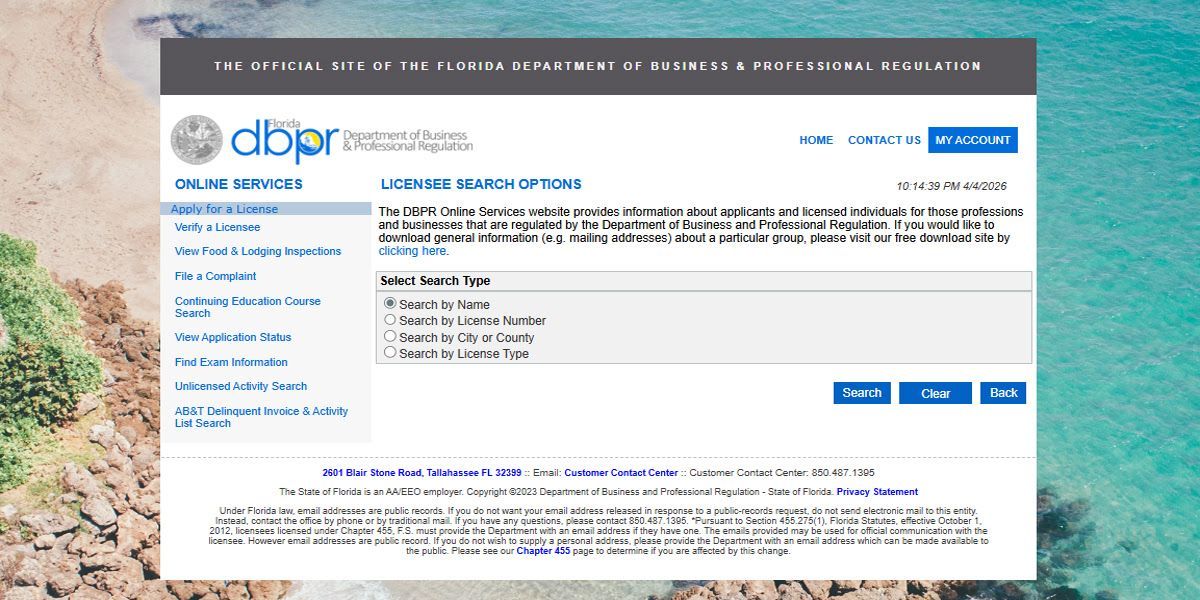
Zoning is the other piece that deserves close attention - and where quite a few North Central Florida landlords run into hot water. The region spans across multiple counties, and what a business is allowed to do in one location might not apply just a few miles away. Alachua, Marion and Columbia counties each have their own zoning laws, and those laws can be pretty different from one county to the next.
Whatever a tenant plans to do with a space has to line up with what the local county will allow on that property. A lease that gets signed before anyone has verified the match can put both parties in a pretty tough bind - and once it's signed, that situation can be very hard to undo. In my experience, this comes up more than it should.
The fix is fairly simple and won't take much of your time up front. Before you move forward with anyone, ask the tenant to describe just what they plan to do with the space and then compare that against what the county's zoning actually allows for your property. A quick call to your county's property appraiser or zoning office can usually get you a reliable answer on what is and isn't permitted at that address.
Early Red Flags Worth a Closer Look
Even when an applicant looks great on paper, the screening process tends to surface small details that just don't quite add up. Those moments are tempting to brush off, and they're usually worth a second look.
A reluctance to share financial records is one of the bigger red flags in this whole process. Any business that's doing well has no actual reason to hold back documentation like that. When a prospect dodges the request or wants to skip that step altogether, that hesitation alone is worth a look.
When a business has moved around quite a bit, that's also worth a closer look. A business that has moved from place to place in a short stretch may have left behind unresolved disputes with previous landlords, or it could just be a sign of an unstable operation. Neither one is an automatic deal-breaker on its own, but both deserve a harder look at the rental history and an honest conversation about what was behind each move.

Pay attention to how steady a prospect's story stays each time they talk about their business. If their answers about what they do, how they make money or who their customers are change from one conversation to the next, that's a red flag. An owner with an established business can usually explain it the same way every time.
Of all the red flags in this process, a tenant who pressures you to sign the lease faster is probably the most telling - and in my experience, it's also one of the most common. When a prospect pushes hard to skip steps or wants to move at an unusually fast pace, they may well be counting on you not to look too closely. A promising rent check is not reason enough to move faster than you're actually comfortable with and you are well within your rights to take the time that you need.
Let Us Handle the Details
The screening process is also your single best window into who a tenant is before the keys change hands. Once that lease is signed, your options become more limited - and expensive. Even when the process has more steps than you'd like, the work that you put in now is worth it.
A review covers credit history, rental background, income verification and references - and each piece tells you something. Leave any of them out, and problems tend to follow. The time it takes to do this well is nothing compared to the time that you'd spend on an eviction, a dispute or an empty unit.

That mindset (where your property works for you instead of the other way around) is at the heart of what we do at Pepine Property Management. We work with property owners from all across North Central Florida who want their investments to do well without the need to personally oversee each detail. From tenant screening and lease agreements to the realities of commercial or residential property ownership, our team brings genuine local knowledge and stays closely involved with every property we manage.
The right team behind you matters whether you own one unit or a few. You get to stay well-informed without being pulled into the day-to-day, and your tenants get the responsive and professional service that keeps them in place longer.
Give Pepine Property Management a call - we'd love to talk about what a professional management plan could do for your property.
Share this post