

How to Raise Rent Legally in North Central Florida

Florida is one of the more landlord-friendly states in the country. That's also the case around rent prices. No statewide rent cap exists on the books - and unlike other states, local governments here have very limited authority to create their own restrictions either. Landlords in Florida have freedom that most other states just don't allow, so if you own rental property here, that's a setup worth understanding.
Florida does still have a set of procedures that landlords have to follow - and the catch is that those procedures carry serious weight. The mistakes don't usually surface at the start of the process. They pop up later - right when a dispute is already underway, and the stakes are a whole lot higher.
The whole process follows a pretty logical order (the lease type first, then the written notice and finally a paper trail), and each step has its own set of details. Any one of them can derail everything if you miss it. A missed deadline or a vague rent increase letter can turn an easy situation into something long and expensive - one that ends up costing far more in time, legal fees and tenant turnover than the rent increase was ever worth.
Let's go through the legal steps to raise rent in North Florida!
Florida Does Not Allow Local Rent Control
Florida's position on rent control is about as one-sided as it gets - landlords win, full stop. State law flat-out prohibits local rent control, so a city like Gainesville or Ocala has no legal ground to stand on, regardless of what local officials or tenants push for.
State preemption is the official term for this, and it's been part of Florida law for quite a few decades. The core idea is that rent levels are a state-level matter - local counties and municipalities don't have the authority to regulate them. That distinction matters more than it might feel, because it means there's no city or county in Florida where a tenant can look to local government for rent protections.

In 2023, Florida passed HB 1417, which reinforced this position in a big way. A local rent control ordinance would be unenforceable and could be struck down outright - a pretty strong deterrent for any city tempted to try. HB 1417 also expanded the scope of preemption to broader landlord-tenant regulation, which means any future attempts by local governments to introduce rent-related restrictions are looking at even steeper legal challenges than before.
Preemption alone doesn't tell you the full picture, though. The type of lease that a tenant has (whether it's a fixed-term agreement or a month-to-month arrangement) comes with its own set of laws around when and how a rent increase can take effect. Those facts matter just as much as the state-level framework that we've covered here. The next section covers them in full.
When Can You Legally Raise Rent?
The type of lease your tenant signed will largely set when you're allowed to raise the rent. A fixed-term lease locks that rate in for the full length of the agreement - so if your tenant moved in at $1,200 a month and it runs through December, that number stays right there until the lease runs out.
One exception worth mentioning here is a rent escalation clause. Some leases include this language right from the start, and if yours does, it gives you a built-in right to raise the rent at a set point during the term. Without that clause written into your agreement, you're going to have to wait it out.
Month-to-month tenancies work a bit differently. Without a fixed end date on the calendar, you have a fair bit more flexibility to raise or lower the rent - you just need to give your tenant the right amount of warning before any change takes effect. That warning period deserves a look, so let's talk about it in the next section.

One of the most common mistakes landlords in North Central Florida make is treating all their tenants the same way, regardless of what their leases say. A signed lease doesn't budge even when the market goes up. That rental rate is a legal obligation for the full term of the lease. Trying to raise the rent before it expires can put you in a pretty messy legal position.
It does pay to read through your own lease before making any decisions about rent. A quick look at what's actually in that document could save you from a very expensive mistake.
Notice Rules for North Central Florida
For month-to-month leases, Florida law is going to need at least 30 days of advance written communication before the next rental period begins. Landlords will voluntarily give more than the minimum - mostly to part on decent terms and stay away from any unnecessary friction at the end of a tenancy. Either way works just fine.
For annual lease non-renewals, Florida state law requires at least 60 days of advance written notice before the lease term ends. Most landlords will stick right to that 60-day mark, and there's a reason for that - it gives your tenant enough time to weigh their options and put a plan together instead of having to figure everything out at the last minute.

How you deliver that written statement matters just as much as the timing itself. Certified mail is one of the best options out there because it gives you a reliable paper trail - you'll have a record of when it went out and when it was received. Hand-delivery works just as well. But if you do, just bring a second copy for the tenant to sign and hold onto that signed copy for your own records.
A quick text message isn't a legal substitute for a formal written statement, and skipping one altogether is just as risky. A written statement delivered correctly and with enough lead time is one of the simplest and most reliable protections a landlord has.
How Much Should You Raise Rent?
Florida is one of the states where rent control just doesn't apply - landlords have the full freedom to raise rent by whatever amount they want. For most landlords, that's a pretty great position to be in. That freedom carries real responsibility, and it's worth putting some thought into it before you settle on a number.
Without a cap in place, the rental market is your best reference point. These are facts worth weighing before you make any decisions.
A large increase can be well within your rights - but legal and smart aren't always the same. Tenant turnover is one of the more expensive parts of owning a rental property, and those costs can add up fast. When a reliable tenant walks out the door, you're left with lost rental income through the vacancy and whatever it takes to prep the unit and bring a new tenant in. A modest increase that your tenant accepts without much pushback is usually the better move - even if the bigger number looked better on paper.

The local rental market deserves its own attention. Gainesville, Ocala and the wider North Central Florida area each have their own market dynamics - and a price that makes sense in one town can miss the mark just a few miles away. A bit of research into local comparable rates goes a long way, and it puts you in a stronger position to land on a number that's fair to you and reasonable for any prospective tenants.
A profitable property and a well-occupied one aren't two separate goals - at least not in my experience. Plenty of landlords treat them like they're at odds. But with a level-headed look at rent increases, the two tend to point in the same direction.
Illegal Rent Increases
Florida law does put some actual limits on when and why a landlord can raise your rent. The most important one to know about is Florida Statute 83.64, which flat-out prohibits retaliatory conduct, including retaliatory rent increases.
One of the most common forms of retaliation is a rent increase that comes right after a tenant files a complaint - about a code violation, a habitability issue, whatever it may be. The increase doesn't even have to be dramatic for this to become a problem. When the timing lines up that closely with a formal complaint, it raises red flags, and a legal challenge is very much on the table.

A tenant doesn't need to show that retaliation was your only motive for the rent increase - just that the timing and the surrounding circumstances point to it. Florida courts take this very seriously. Once that connection is made, the burden can shift to the landlord to explain and justify the increase.
Fair Housing law can add another consideration here. Federal and state Fair Housing laws make it illegal to raise rent based on factors like race, religion, national origin, sex, familial status or disability. Even a rent increase that reads as neutral on paper can become a Fair Housing issue if it looks like it's singling out a particular tenant. The safest path is to apply any rent change in the same way across all comparable units. With records of how you arrived at your new rate (what the market looked like and what your comps were), you'll have a much easier time showing that your call was based on the market and not on who's living in the unit.
HB 1417 and New Landlord Protections
Florida's landlord-tenant laws don't stay put for very long, and 2023 was an example of that. The state passed HB 1417, which ended up having quite an effect on how rental housing works across the whole state - it was one of the more wide-reaching changes Florida has seen in this area in a while.
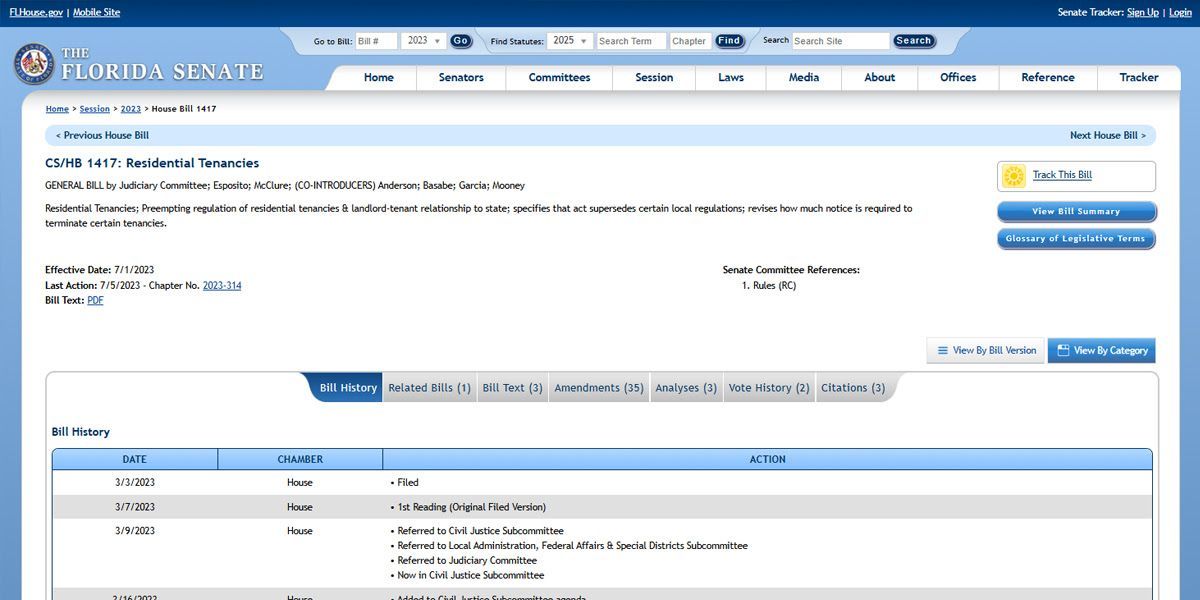
One of the law's bigger moves was handing the state much tighter control over landlord-tenant relationships - and it didn't stop there. Local governments also lost their ability to add rental laws on top of what the state law already permits. That includes cities and counties in North Central Florida. For landlords in this region, the whole rental picture looks pretty different.
Before HB 1417, local governments had at least some room to put their own tenant protections and housing policies in place. Most of that room is gone now, and the effect of that change is worth some attention. What worked at the local level before might not line up with what the state now allows.
For landlords, it's a change in where your attention needs to be. The authority over how rent increases get handled, what you have to tell tenants and what a lease agreement needs to include - that runs through Tallahassee now (not your city hall). Local rental ordinances have much less pull than they used to, so it's worth your time to stay on top of state-level news and legislative updates.
Florida has already gone back and revisited these laws before, and HB 1417 is a reminder that everything can change in just one legislative session.
Document Everything to Stay Protected
If you already have one or more rental properties to look after, your records are usually last on the things to deal with for the week. Still, it's an important chore. Let's talk about why.
Rent increase letters are a great place to start building your paper trail. Save a copy of each one that you send out, and whenever it's possible, send them through certified mail. With certified mail, you get a receipt that logs the date and the delivery confirmation - right there together. I see this fairly regularly (tenants who dispute whether they ever received the letter). That receipt makes it very easy to settle.

A communication log is worth just as much. It doesn't have to be elaborate or all that formal - a basic document does the job well. Even a plain folder of saved emails and text message screenshots can matter quite a bit if a dispute ever comes up.
Most landlords won't think to put a system like this in place until something has already gone wrong with a tenant - it's a very common position to be in, for what it's worth. Multiple properties mean quite a few moving parts, and the paperwork side is usually the first part to get pushed aside. The upside is that it's never too late to get more organized, and the next rent increase letter that you send out is as great a starting point as any.
The more records you have on file, the more confident you'll feel if it ever gets to a formal dispute or legal process. It doesn't have to be a perfect system - it just has to be there.
Let Us Handle the Details
A rent increase in North Central Florida is a matter of a few steps done in the right order - what the law permits, the right timing for your lease type, a written letter, a price that fits in with the market, a safe distance from anything that could come across as retaliatory or discriminatory and a paper trail to cover it. None of these steps are all that hard on their own and none of them take very long either. What matters is that they all happen together in sequence and with nothing left out along the way.
No system is ever foolproof, of course. The landlords who find themselves in a tough position are usually the ones who rushed through it or who skipped a step because it seemed unnecessary at the time.

Pepine Property Management was built specifically for property owners who want to be less involved in the day-to-day. We work with landlords all across North Central Florida, and we cover everything from lease management and rent collection to maintenance and the careful recordkeeping that helps keep you protected. When the responsibilities of owning rental property start to feel like a bit much, we would love to help.
Get in touch with Pepine Property Management to ask for a free rental analysis and see what a local and experienced property management team can do!
Share this post